Roland Empire
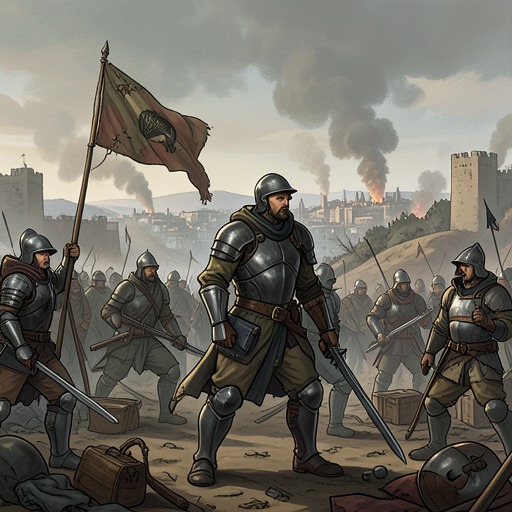
Awakening the Angel System: Apocalypse: A LitRPG Progression FantasyRoland Empire is presented as both a powerful imperial state and a dying political order. Its institutions govern military conduct, its cities serve as monuments to human civilization, and its commanders become critical actors in the search for the Forgotten Continent. Yet the empire’s authority is steadily discredited by conquest, catastrophe, and the transformation of its surviving leadership into a new political project.
Imperial Power and Political Ritual
Roland Empire’s political world is defined by hierarchy, ceremony, and inherited authority. Jack enters an imperial chamber in a major’s dress uniform beside Duchess Belia Bell, who serves as the nearest available parent because she heads his deceased mother’s noble house. The entrance is not merely familial: mothers, or mother-figures, traditionally lead sons down the imperial aisle, making Duchess Belia Bell’s gesture part of a formal culture in which dynastic identity is publicly staged. Jack’s polished black boots and Duchess Belia Bell’s red heels move together as hundreds of strangers watch, binding personal legitimacy to the empire’s ceremonial order.
The empire’s political language also depends on law. During the struggle over its capital, Jack announces that imperial war doctrine forbids surrender while a force still has the means to resist. He presents that rule as evidence of an old order that has become intolerable: the Imperium is described as dead, with its remains available to those who will build the future. His offer of humane treatment and free citizenship in the Cordelica Democracy therefore opposes the empire’s coercive wartime code with a new promise of political belonging.
Cities, Conquest, and Collapse
The scale of Roland Empire’s destruction is conveyed through its ruined urban centers. Selfia identifies Lunacrypt, Soldaer, and Clausterfiell as monuments of human existence being erased, while Solarus, described as the crown jewel of the Imperium, lies in ruin. The empire is thus not represented as a stable state awaiting restoration; it is a civilization whose physical symbols are being destroyed faster than its institutions can respond.
Windermere gives that collapse a particularly concrete form. Once the southern hub of Roland’s forces and the home of Adolf Hoffman, it has been transformed into a devastated coastline of ruined boats, piers, harbors, and docks after Jack marches through it with his army. The setting turns imperial geography into evidence of military reversal: a regional center that once projected Roland power survives only as a damaged landscape connected to Jack’s campaign.
The empire’s decline unfolds alongside the demonspawn apocalypse. As new monstrosities appear and attacks increase beyond anything previously seen, human victory seems nearly impossible. Roland’s defeat is therefore not an isolated dynastic change but part of a larger collapse in which the structures that once organized human sovereignty are overwhelmed by an existential threat.
Military Personnel and the Forgotten Continent
Even after Roland Empire’s authority fractures, its military history remains indispensable. Dorian Jazz is identified as a former Imperial commander who served in the Seventh Solomon Expeditions, search parties organized with the resources of the collective nation to find the High Table. His imperial service links Roland’s state machinery to an older cycle of exploration, secrecy, and strategic competition.
Dorian Jazz’s activities create a new threat after the empire’s decline. He gathers personnel and resources for another expedition into the Forgotten Continent, while demonspawn and Apostles of the End pour out of that region toward human shores. Selfia’s government seeks to capture Dorian Jazz, seize his boats, and possibly strike at the Black King. The expedition becomes strategically necessary because the miasma disrupts skyships, making specialized boats the practical means of reaching the distant continent.
Jack recognizes the significance of Dorian Jazz’s connection to the Second Solomon expedition. Sahaqiel had said that Heaven lay over the continent known as Africa, and Dorian Jazz’s effort to assemble survivors and soldiers for a sea voyage supplies Jack with a lead. The empire’s former officer consequently becomes a bridge between Roland’s military past, the lost expeditions, Heaven, and the Black King’s apocalyptic campaign.
From Imperial Survival to Human Resistance
Selfia’s wartime address shows the political meaning of Roland Empire’s end. She names the ruined cities and warns that humanity itself may be exterminated unless the threat is confronted immediately. Her conclusion is not to preserve the empire as it was, but to attack: the expedition she announces is framed as the greatest undertaken since humanity went into space and as the means by which humanity will reclaim its future.
This rhetoric converts imperial resources into a broader human cause. The old state’s fleets, soldiers, commanders, and military laws remain present, but their purpose is being reinterpreted. Jack’s earlier surrender offer rejects Roland’s demand for resistance unto destruction, while Selfia’s later speech mobilizes survivors for an offensive against the demonspawn. The political community is therefore rebuilt through a double movement: imperial identity is condemned as a dead order, yet imperial infrastructure is repurposed for collective survival.
The later appearance of Selfia as president of the Republic confirms that the empire’s political trajectory does not end with simple restoration. She arrives sleep-deprived in a black-armored limousine, accompanied by Violet, and is addressed as Madam President rather than as an imperial sovereign. The scene places the former imperial world inside a republican future: its leaders, military technology, and surviving authority continue, but the title and institutional framework have changed.
Narrative Significance
Roland Empire functions as the story’s central image of exhausted state power. Its ceremonies can still dignify a soldier’s entrance, its laws can still regulate surrender, and its commanders can still organize expeditions, but none of those forms can prevent the destruction of its cities or the spread of the apocalypse. The empire’s collapse exposes the limits of legitimacy based solely on lineage, military endurance, and inherited doctrine.
At the same time, the empire is not discarded as irrelevant. Its ruins define the geography of the war, its expeditions preserve clues to Heaven and the Forgotten Continent, and its personnel retain the knowledge needed for humanity’s next campaign. Roland Empire’s historical function is therefore paradoxical: it is the order that must be overcome, and the institutional remains from which a new resistance is assembled. Its movement from ceremonial monarchy through military ruin toward republican reorganization gives the wider conflict a political dimension beyond the battle against the demonspawn.